
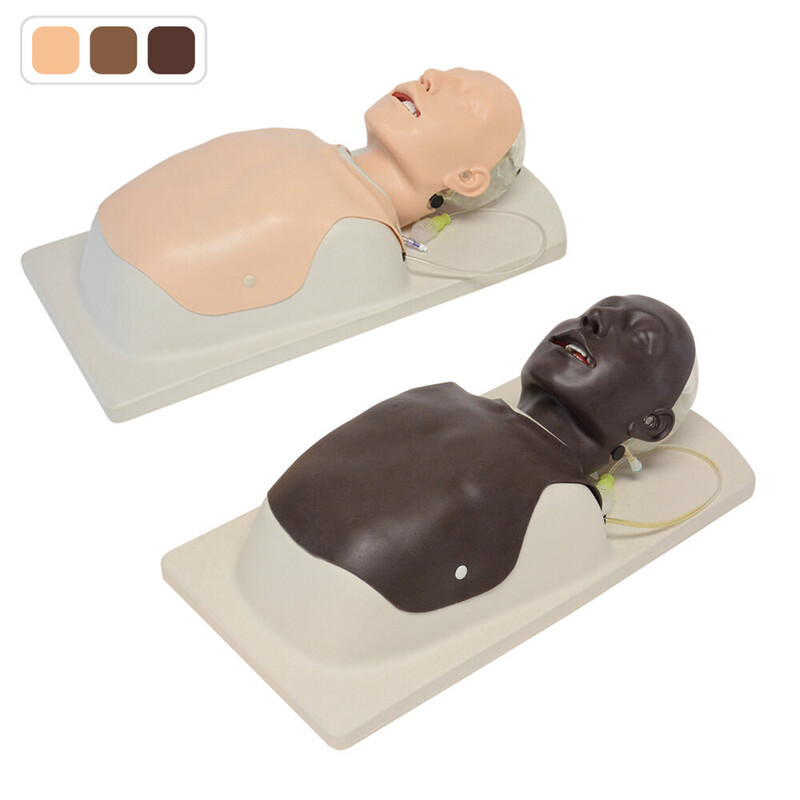
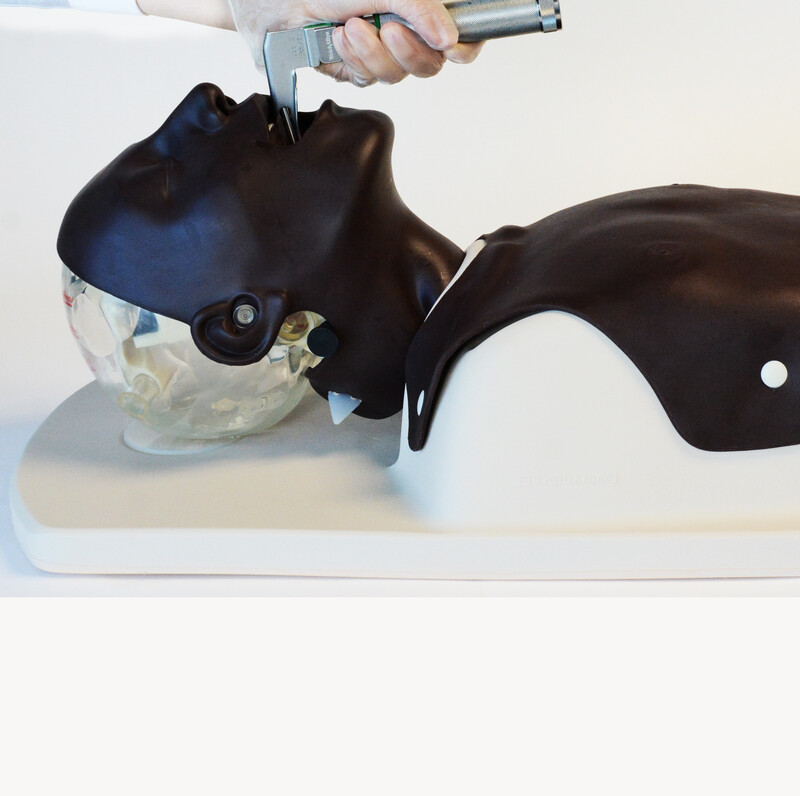
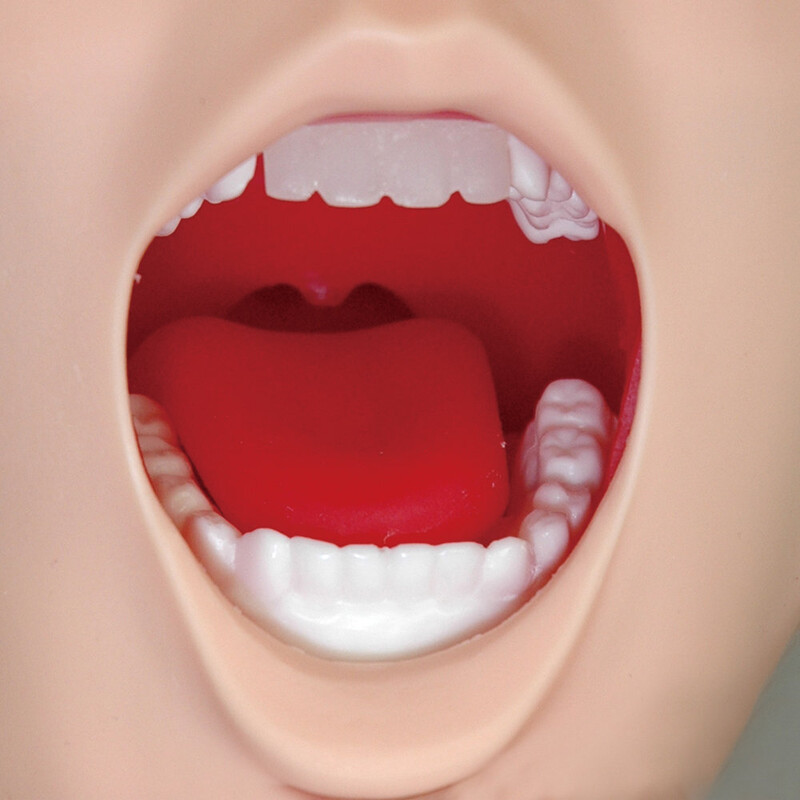
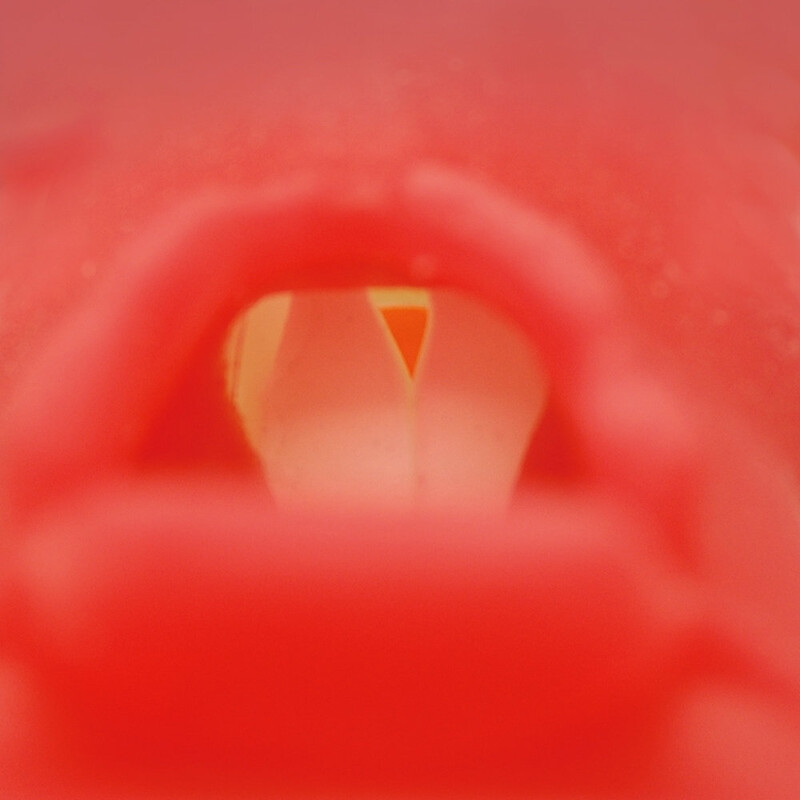
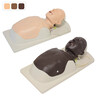
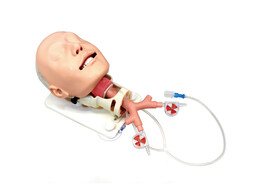
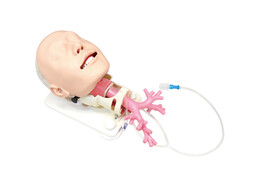
From beginners to experts with a range of difficulty levels/Difficult Airway Management Simulator provides training for users
Features
1. 24 variations of patient scenario (including 1 normal case):
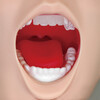
3 stages of mouth opening, 2 stages of neck flexibility, 2 tongue sizes and 2 positions of the vocal cords
2. Upper incisors are designed to break offwhen excessive force is applied.
3. For Nasal intubation: anatomically correct middle and inferior nasal concha to lean direction of the tube.
Training skills / Applications
-Airway opening techniques (head tilt, jaw thrust)
-Bag-Valve-Mask ventilation
-Pre-intubation airway assessment
-Recreating the sniffing position
-Pressurization of external larynx to improve the laryngeal view Intraoral/Intranasal Intubation
-Use of oropharyngeal airway (OPA)
-Use of nasopharyngeal airway (NPA)
-Use of laryngeal airway mask
-Use of video laryngoscope
-Confirmation of successful ventilation by:
observation of thoracic and abdominal movement (lung expanding, stomach inflating) or auscultation of the chest
-Simulates incorrect procedures including intubation in the esophagus and unilateral intubation
-Practice securing tubes after intubation
Case / Pathology
-Variation of DAM Setting
-Neck Flexibility (Life-like jaw movement)
Mouth Opening/ - Normal /- Intermediate /- Difficult Tongue/ - Normal/- Swollen
Laryngospasm/ - Normal/ - Laryngospasm
Set includes
-1 manikin
-3 upper incisors
-2 tongues II
-1 lubricant
-1 syringe
-1 carrying bag
-1 instruction manual
Features
1. 24 variations of patient scenario (including 1 normal case):
3 stages of mouth opening, 2 stages of neck flexibility, 2 tongue sizes and 2 positions of the vocal cords
2. Upper incisors are designed to break offwhen excessive force is applied.
3. For Nasal intubation: anatomically correct middle and inferior nasal concha to lean direction of the tube.
Training skills / Applications
-Airway opening techniques (head tilt, jaw thrust)
-Bag-Valve-Mask ventilation
-Pre-intubation airway assessment
-Recreating the sniffing position
-Pressurization of external larynx to improve the laryngeal view Intraoral/Intranasal Intubation
-Use of oropharyngeal airway (OPA)
-Use of nasopharyngeal airway (NPA)
-Use of laryngeal airway mask
-Use of video laryngoscope
-Confirmation of successful ventilation by:
observation of thoracic and abdominal movement (lung expanding, stomach inflating) or auscultation of the chest
-Simulates incorrect procedures including intubation in the esophagus and unilateral intubation
-Practice securing tubes after intubation
Case / Pathology
-Variation of DAM Setting
-Neck Flexibility (Life-like jaw movement)
Mouth Opening/ - Normal /- Intermediate /- Difficult Tongue/ - Normal/- Swollen
Laryngospasm/ - Normal/ - Laryngospasm
Set includes
-1 manikin
-3 upper incisors
-2 tongues II
-1 lubricant
-1 syringe
-1 carrying bag
-1 instruction manual
Show more
Properties
- 805246
Links & downloads

Intubation of airways -
MW13/KK
Diverse - X -
805248
Diverse - X -
805254